 Truck / SUV
 Jeep®
 Restoration
 Stock Replacement
 Late Model Muscle
 Tools
 Gifts, Clothing, & More
 Circle Track
 Street Rod
 Powersports
 Paint & Body
 Marine
 Jr Dragster
News & Events
News You Can Use
Jan 4, 2019
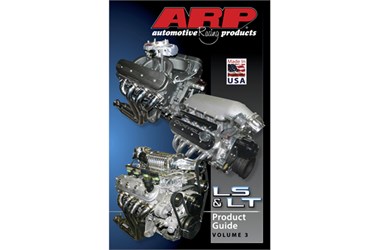
Get the Right ARP Fasteners for Your Late Model GM, Ford, or Mopar Engine
Wouldn’t it be great to find every ARP fastener available for your late model GM LS/LT, Ford 5.0L Coyote, or Chrysler Gen III Hemi in an easy-to-use format? That’s exactly what ARP has done with its new Product Guides.
From main bearing cap stud kits to connecting rod bolts, cylinder head bolts and studs, valve cover bolts, and complete Engine Accessory Kits, the Product Guides provide part numbers and valuable tech information that make choosing the right fasteners quick and easy. Armed with all that information, you can order the ARP products you need at SummitRacing.com, saving you even more time and effort. And if you have a question, you can call, text, live chat, or e-mail a friendly Summit Racing rep for answers.
Jan 2, 2019
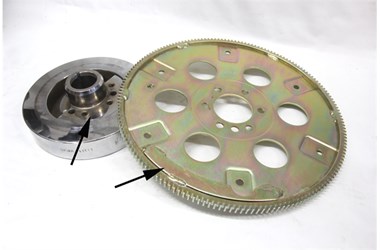
Ask Away with Jeff Smith: Big Block Flywheels and Swapping Firing Orders
Yes, it's January, but we're catching up after the holidays, including this summary of the December 2018 'Ask Away with Jeff Smith' columns. Without further ado...
Dec 18, 2018

Videos: Traxxas vs. Can-Am Maverick and Sunex Utility Cart Review
Our friends Brian and Jeff over at Workshop Addict sent us a couple of videos they thought y’all would like to see—take a look:
Traxxas X-Maxx 8S vs. Can-Am Maverick X3 XRS
At first glance, pitting a Traxxas X-Maxx 8S RC truck against a 2018 Can-Am Maverick X3 XRS UTV seems like a David vs. Goliath battle, with Goliath holding all the cards. But as you’ll see in the video, the competition was—well, surprising.
With a Velineon 1200XL ‘Big Block’ motor and rolling on eight inch tall tires, the X-Maxx is Traxxas’ largest, most powerful truck. Traxxas flat-out says the X-Maxx is wildly overpowered.
The Can-Am Maverick X3 is no slouch, either. With a 120 horsepower turbocharged engine, it can do 0 to 60 MPH in under five seconds.
And that’s all we’re going to share with you. You’ll have to watch the video to see if the Can-Am runs roughshod over the Traxxas or is left in the dust—er, snow—by the mighty X-Maxx.
Nov 30, 2018
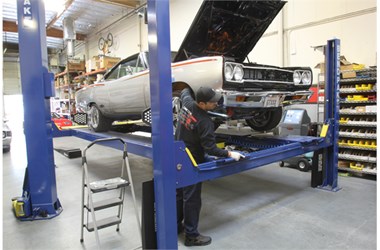
Ask Away with Jeff Smith: How to do a Performance Front End Alignment
We have but a single Ask Away tech column this month. We blame an overindulgence of turkey, stuffing, and football on the part of Mr. Smith.
Anyhow, our lone tech question is actually a very good one. G.W. asks:
"I have a ‘61 Comet wagon with Mustang II type front suspension with rack and pinion steering that has replaced the stock OE shock tower suspension and steering box. The car is primarily for street use but it will also see occasional drag strip use. My question lies in the front end alignment specs. Should we align to stock ‘61 Comet alignment specs or would other settings be more desirable? I know that some drag racers like extra caster for top end stability as well as a little negative camber."
Oct 31, 2018
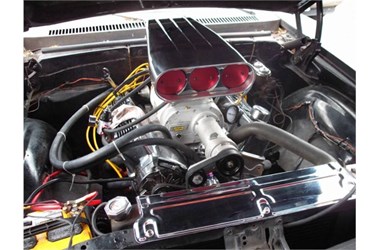
Ask away with Jeff Smith: Charging, Stick Shifts, and Blowers
You have questions, Jeff Smith has answers. This time around, he's taken on questions on superchargers, manual transmission swaps, and electrical systems.
Can I Put a Blower on a 383 with 10:1 Compression?
C.H. is direct and to the point with his question:
"Can I put a blower on my balanced and blueprinted 383 c.i.d. stocker motor that has 10:1 compression? I just want it for looks, not to race"
Jeff says:
Any engine with a 10:1 static compression ratio is right on the edge of working with 91 to 93 octane pump gasoline, adding a supercharger even with just a small amount of boost (let’s say 7 PSI), is roughly equivalent to raising the static compression ratio to 14:1 at full boost. At part throttle, you probably could get away with running a blower very slowly and the engine might not detonate. But you’d never be able to go to wide-open-throttle because the engine would detonate badly unless the timing was severely retarded.
Jeff goes on to list three possible ways to make this combination work: E85 or 100 octane racing gasoline, swapping pistons to lower the compression ratio, or running a water/methanol injection setup. Whatever you do, avoiding detonation is the name of the game.
Sep 30, 2018

Ask Away with Jeff Smith: Distributor Gaps and Tick-Tick-Tick Noise
This time 'round Jeff Smith has ignition issues and ticking noises to tackle.
What's the Best Rotor Tip and Terminal Spacing for My Ignition System?
Ted P. asks:
"I have a question about the optimum distributor rotor tip and terminal gap. All things being equal, do we want a relatively close rotor tip and terminal spacing? Would 0.020-inch be acceptable? if we want wide gaps anywhere then we open up the plug gaps, not anything inside the distributor. This old ‘60s Ford I’m working on has a huge rotor tip gap using a Motorcraft rotor."
Jeff says the basic idea is to minimize the resistance from the coil to the spark plugs by reducing the gap the spark must jump. As the gap between the rotor and the distributor cap increases, the more voltage the coil and the secondary side of the ignition system must provide. He also says to look for distributor caps and rotors with copper terminals and contacts as copper is a much better conductor than aluminum, which is found in cheaper parts. Jeff knows, 'cause he did experiments and everything.
Aug 31, 2018
Ask Away with Jeff Smith: More Zinc, Bypass Regulators, and Exhaust Smells
How much zinc is too much for engine oil? How do you install a bypass fuel pressure regulator in an EFI fuel system? And what the heck does a camshaft have to do with exhaust smell? Jeff Smith has the answers to these questions--take a look.
Aug 23, 2018

Buying Tips and New Tires for a Can-Am Maverick X3
Our friend Brian at WrenchesandRides.com has been an ATV/UTV rider for many years. He recently got his mitts on a used 2017 Can-Am Maverick X3 and will be doing a series of videos on modifying the machine for better performance.
In the first video, Brian talks about what to look for when buying a used Maverick X3. One thing he emphasizes is that these machines make a lot of power, and people who bought one often didn't realize that would roll them or run into stuff, then try to pawn it off on some unsuspecting buyer--like you, for example. A lot of what Brian talks about is applicable to other makes of ATV and UTVs, so it's well worth watching.
In the second video, Brian talks about the brand new set of Maxxis Carnivore tires he got from Summit Racing to replace the Can-Am's factory Bighorn tires. As you'll see, it's a no-brainer upgrade--Brian got a tire with a really aggressive tread for the Michigan mud he usually rides in, and it doesn't weigh much more than the factory rubber.
Brian plans to make more upgrades to the Can-Am and do some actual testing too--we'll keep you up to date on his progress.
Jul 31, 2018

Ask Away with Jeff Smith: 283 Small Block Upgrades and Chevelle Transmissions
This month it's a tale of small block Chevy upgrades and choosing the right transmission for a 1964 Chevelle.
Best Performance Upgrades for a 283 Chevy Small Block
J.T. ask about hotrodding his little 283:
"I have a 0.060-overbored 283 that is now at 292 cubic inches. I just finished the short block and all my friends are telling me to put a big set of heads on this to help it make power. I can get a set of those “camel back” or “double-hump” heads—I think the cast number is 462. This is going to be a very mild 292 in my street rod and I might even add a Rochester tri-power setup on it to give it an old time hot rod look. Any ideas?"
Jeff says the thing to remember with small cubic inch engines like the 283 is that they like compression. The 461 or 462 'fuelie' heads have a larger 64cc combustion chamber and do flow more air. But those heads will actually lower compression compared to using heads with smaller 60cc or 58cc chambers. Jeff recommends two cylinder heads, one of which is Trick Flow's 175 DHC head. With 60cc chambers and flat top pistons, compression for the little block comes out around 9.35:1--acceptable for a street-driven car.
Jul 18, 2018

See How Our Summit Racing Pro LS Camshafts are Made
You know what they say about hot dogs—they taste great but you don’t want to know how they’re made. That’s not the case with our Summit Racing Pro LS Camshafts. The cams are made on state-of-the-art equipment in a U.S. facility, and we want you to see exactly how our cams are manufactured, from initial machining of the American-made 5150 steel cores to heat treatment and final grinding. It’s one of the most advanced camshaft facilities in the country.
Go on the Pro LS camshaft factory tour on our OnAllCylinders blog, then check out our selection of Pro LS Camshafts to see which one is right for your LS engine build.
Media Resources Download Key
Low Resolution Images
High Resolution Images
PDF Documentation