 Truck / SUV
 Jeep®
 Restoration
 Stock Replacement
 Late Model Muscle
 Tools
 Gifts, Clothing, & More
 Circle Track
 Street Rod
 Powersports
 Paint & Body
 Marine
 Jr Dragster
News & Events
News You Can Use
Jun 30, 2018
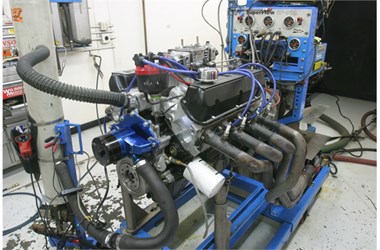
Ask Away with Jeff Smith: Hard Starting, 12 Second ETs, and LS Intakes
We've got some really juicy Ask Away questions this time 'round, and Jeff Smith has equally juicy answers. Let's get to them, shall we?
Troubleshooting Hot Start Problems with a Chevy 454
D.G. has hot start issues with the big block in his Camaro:
"I have a ’69 Camaro with a 454. I went to fill it with gas on its first run for the spring and drove it perhaps 20 miles. After stopping briefly, it would not restart. The engine sounded like it wanted to crank but turned over slowly.
The battery tested 12.8 volts and its only six months old, so I don’t think that’s the problem. I changed starter motors last year to try to cure this problem and it seemed like it was fixed. The fuel line runs along the frame and is close to the headers at one point. Could this be causing vapor lock after I shut it off? It starts fine when it’s cold."
Jeff concluded the problem can be traced to bad battery cables:
"It’s likely that the problem stems from either a poor ground circuit between the engine and the battery or a voltage drop in the positive battery cable.
You can perform a quick test to establish the actual culprit. But before we get into that, the answer is that your starter circuit is experiencing excessive resistance either in the positive battery cable down to the starter, through the ground circuit, or likely both."
Jeff goes on to why this happens and how to test the cables to find out for sure if they are the culprits.
May 31, 2018
Ask Away with Jeff Smith: Hot Plugs, Glazed Cylinders, and Pump Gas Additives
Three is the number of tech questions Jeff Smith answers in this month's Ask Away column, and the number of tech questions is three.
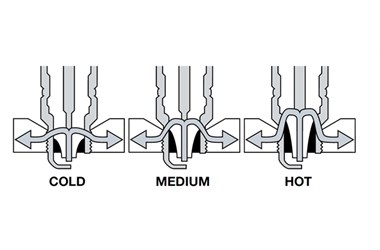
Determining the Correct Spark Plug Heat Range
Mark S. gets the Atta Boy for Shortest Ask Away Question:"How do I find the correct heat range spark plug for my engine?"
Per Mr. Smith, the short answer for a performance street engine is to use the hottest spark plug that will live. But the reasons take some explaining. A spark plug needs sufficient heat to keep the center electrode mostly free of carbon deposits that can cause a misfire. But increased cylinder pressure in a modified engine creates more heat in the combustion chamber, making life harder for the plug. Finding a spark plug with the correct heat range takes both knowledge and testing, which Jeff goes on to explain at length.
Apr 30, 2018
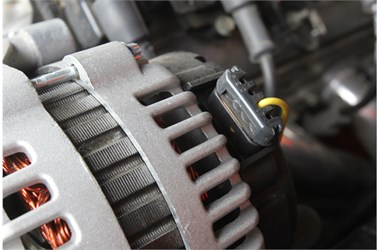
Ask Away with Jeff Smith: Porting, Honing, 700 HP, and Dead Alternators
There is never a shortage of interesting topics in Jeff Smith's Ask Away! column. This month is no exception--we've got not two, not three, but four pleas for help that Mr. Smith addressed as only he can.
Adding Ported Vortec Heads to a Small Block Chevy for More Power
R.B. has a good memory. He writes:
"You did a tech answer around two years ago about adding a set of Vortec heads to a small block Chevy. How much of a horsepower gain could you expect from porting these heads using the proper cam and everything?"
In the original column from 2016, Jeff was asked about modifying Vortec cylinder heads to accept more valve lift. He explained how to do that, and suggested a combo of the modified heads and a Chevrolet Performance Hot Cam camshaft that would make 350 to 375 horsepower.
R.B.'s question is about porting Vortec heads for more airflow. Jeff suggested concentrating on the exhaust side of the head. Vortec heads have intake ports that flow fairly well, but weak exhaust ports limit high RPM horsepower. You can pick up as much as 20-25 horsepower by modifying the exhaust side just in the area directly under the exhaust valve seat. This is often called pocket porting. Jeff goes on to talk about other upgrades needed to take advantage of the additional airflow.
Mar 31, 2018
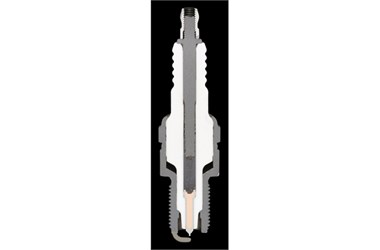
Ask Away! with Jeff Smith: Front End Shake, Lockup Converters, and Fine Wire Spark Plugs
What better way to celebrate the arrival of spring than with not one, not two, but three Ask Away! with Jeff Smith tech advice columns? Sure beats a basket of stale Peeps.
Front Wheel Shake on a Chevy II
C.T. writes:
"I have a ’66 Chevy II with a 355 cubic inch small-block and a Muncie four-speed. Over the years, I’ve made some small suspension modifications with Global West De-A-Lum bushings. On the freeway, the car can get into violent front-wheel shake where the steering wheel wobbles really badly in my hands. It gets so bad that I have to stop and then lightly get back up to speed. It seems to happen more often when I give it more gas. It’s so bad I don’t want to drive the car until I can get it fixed. What should I do?"
The 1962-67 Chevy II front suspension places the coil spring is above the upper control arm rather than between the upper and lower control arms as it is on cars like the Camaro and Chevelle. The design causes serious bump steer issues; bump steer is a term used to describe massive toe changes aggravated by big camber changes that occur as the front suspension moves through its entire length of travel.
According to Jeff, it's possible that a combination of a worn drag link, idler arm, and perhaps a less-than-ideal alignment to create the situation C.T. describes. If you own an early Chevy II, read the article and find out the whys and fixes for this common problem.
Feb 28, 2018
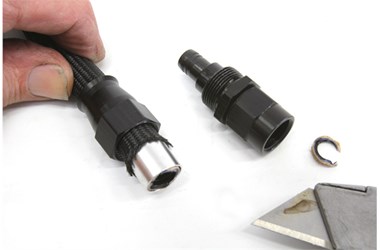
Ask Away! with Jeff Smith: Transmission Gearing and EFI Fuel Lines
This month in the Ask Away! column on our OnAllCylinders blog, tech know-it-all (and he does, too) Jeff Smith answers questions on making a four-speed automatic transmission into a six-speed and how to make custom fuel lines for an EFI-equipped car.
When Four Becomes Six
Curious reader R.F. wants to know how TCI added two extra gears to a GM 4L80E transmission:
"I see where Summit Racing lists a TCI 6X transmission that was originally a 4L80E as a six-speed transmission. I’ve heard a little about this—did they add two more gears to the transmission? How is this different from the GM 6L80E transmission that is used in the Corvette or in the newer GM trucks?"
Jeff explains that what TCI did was to engage the overdrive at the back of the trans to split the gear spread between the original First and Second gear ratios and again between Second and Third. Because the six-speed is splitting ratios, the rpm drop between gears is less because the transmission is basically a five-speed automatic with an overdrive. By reducing the rpm drop between gears, the engine remains within its power band. Jeff also says that simulations show the TCI 6X can drop ETs by 0.10 to perhaps 0.15 of a second in a quarter-mile compared to a stock 4L80E.
Jan 31, 2018

Ask Away! with Jeff Smith: Engine Knock and Boost with E85
It's all engines this month in Jeff Smith's Ask Away! column at our OnAllCylinders blog.
Rod Knock?
The first question comes from D.L., who has an kicking issue with the small block in his Camaro:
"I recently bought a really awesome street Camaro with a 355 cubic inch small block, a Super T-10 4-speed, and a 12-bolt with 4.10 gears. The engine runs really great and pulls hard all the way to 6,500 RPM, but it has this really bad knock when the engine’s cold. After it warms up, it’s not nearly as loud. It sounds like the rods are going to come right out of the pan when the engine is cold. I called the guy who sold me the car and he said this was normal because it has race pistons in it and that the engine was fine. He says not to worry about it because the engine has always done that and the engine has lots of street miles on it without a problem. Did he just pawn off a broken motor on me?"
Jan 2, 2018
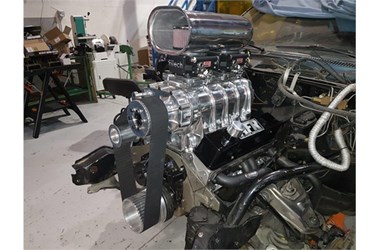
Ask Away! with Jeff Smith: Blown and Gassed EFI 355 and Scuffing Brake Pads
Jeff Smith finishes up 2017 with a couple of interesting issues.
Supercharger and Nitrous Oxide on a Small Block Chevy
D.W. writes: "I am building a 355 cubic inch small-block Chevy with AFR 220cc Race Ready heads, an Erson roller cam, and FiTech fuel injection. Can I use a wet nitrous system injected under the fuel injection and then into a Weiand 6-71 blower?"
Jeff's short answer is yes, this setup is possible. The FiTech EFI system can be set up for a wet nitrous system (injecting both fuel and nitrous). This adds fuel to the engine when the nitrous is engaged. Once the nitrous is engaged, the EFI computer triggers a specific nitrous air-fuel ratio target. You spec the A/F ratio and the system will automatically adjust by either by adding or subtracting fuel from the throttle body(s).
Injecting nitrous in the supercharger will also help cool the inlet temperature down--Roots style blowers create a lot of heat. Jeff does throw in a few caveats about going this route--find out what those are in the article at OnAllCylinders.
Dec 1, 2017
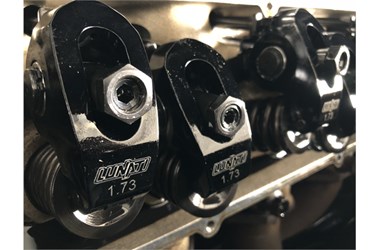
Ask Away! with Jeff Smith: Stumbling 460s and Shorter Timing Chains
Troubles..you've got troubles with your cars and engines. Solutions...we have solutions from carmighty Jeff Smith. Read on to see how he helped these guys.
Troubleshooting Idling Problems with a 460 Ford
S.C. had issues with his big block Ford:
"I have a 429 Ford in a Torino I bought about five months ago. The previous owner told me it has a flat tappet hydraulic performance cam but he didn’t know the specs or much of anything else about the engine. Just recently, the engine started making a ticking noise that is the same as engine RPM. We discovered one rocker arm was loose, so we put on new rockers.
The engine now doesn’t really run right. It doesn’t idle as well as it used to and the idle rolls. I think it acts like a vacuum leak but another friend said it could be ignition. I changed the cap and rotor and new spark plugs but that didn’t help. Compression is even but it seems really low on all the cylinders at around 135 pounds. We’re running out of things to try."
Nov 1, 2017

Ask Away! with Jeff Smith: Rear Axle Gears and Valvetrain Lash
This month in OnAllCylinders' Ask Away! column, Jeff Smith tackles a couple of mysterious questions: how to determine the real gear ratio in a rear axle and setting valve lash on an unknown camshaft. It's like an automotive Scooby Doo mystery without the fake monsters.
Sep 30, 2017
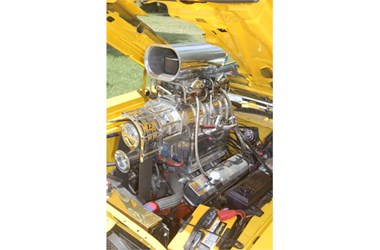
Ask Away! with Jeff Smith: Boost vs. Horsepower and EFI Compatibility
Compatibility is the theme for this month's Ask Away! with Jeff Smith tech column at our OnAllCylinders blog.
Why More Engine Boost Doesn't Always Mean More Horsepower
First up is a question from reader S.I.. He was watching a video on a supercharged LS3 engine. One cam resulted in more power at X amount of boost, but going to a bigger cam produced more power with less boost. Jeff put in terms of airflow restriction. Because the second cam was of longer duration, it kept the valves open longer. That allowed more air to flow into the cylinders with a a corresponding drop in boost pressure. Jeff does a much better job explaining what's going on, so go to OAC and get the straight poop.
Media Resources Download Key
Low Resolution Images
High Resolution Images
PDF Documentation