Availability

AFX Racing offers 1966 Ford GT40 MKIV #1 Red Mega G+ slot cars! The origins of the full-size car is marred by tragedy. It began in 1966 with the J-Car just after LeMans. Ken Miles was test driving the car when it crashed on an embankment, bursting into flames. The rest is heavy-hearted history. There were only 10 made, only half of which ever actually raced. However, the MKIV is known for breaking records both at home and abroad. It only ran in two races: the Sebring 12 Hours and the 24 Hours of Le Mans—the most prestigious race events in all of motorsport. It won both. These victories were no accident. Ford made sure of that. The car was specifically, painstakingly designed for endurance, designed for speed … designed to win. Each element of the MKIV was totally different from other GT40s, starting with where it was made. The MKIV was built from scratch in the United States, unlike its predecessors the MKI and ll cars which were built entirely or partly in Europe. A little "skunk works" company called Kar Kraft built the all-new J series chassis and newly designed long, streamlined bodywork for Ford's Special Vehicles Activity. The MKIV was easily the most radical variant of all the GT40s. Other modifications were made as well. A NASCAR-style, steel-tube roll cage was added as a direct result of beloved racer Ken Miles' tragic death while testing the first J Car. Though it was significantly safer, the roll cage was incredibly heavy which hurt the car's performance. This particular beauty, the red MKIV #1, was on the J5 Chassis. Despite its skilled drivers Dan Gurney and A.J. Foyt, the red #1 was written off and thought to be least likely to win. To top it off, driver Dan Gurney was 6′ 4"—too tall to fit in the standard GT40. So, the team built the car body around him, lowering the position of the driver's seat and making a "bubble" shaped piece for the roof of the car. This would become forever known as the "Gurney Bubble." Dan Gurney often complained about its weight. It was a massive 600 lbs. heavier than their archrival, the Ferrari 330 P4. During practice at Le Mans in 1967, Gurney developed a strategy in an effort to preserve the brakes—highly stressed under the additional weight of the car. He backed completely off the throttle several hundred yards before the approach to the Mulsanne hairpin (a well-known high-crash zone), virtually coasting into the braking area. This technique (also adopted by his co-driver A.J. Foyt) saved the brakes but increased the car's recorded lap times. Looking on, the Ford team feared that Gurney and Foyt, in their efforts to compromise on chassis settings, had hopelessly "dialed out" their car. However, thanks in part to the car's incredible aerodynamics, it became the fastest in a straight line that year, topping out at an exceptional 212 mph on the 3.6-mile Mulsanne Straight. With drivers A.J. Foyt and Dan Gurney at the helm, the red MKIV #1 took the lead within the first 90 minutes and finished an entire four laps ahead of the second-place Ferarri 330 P4. The overwhelming victory sent the entire team into joyful hysterics. So much so that the pit crew members climbed onto the race-winning car, consequently cracking the bodywork on the nose of the car. That damage to the car's nose can still be seen on the beautifully preserved car today. This epic race on Sunday, June 11, 1967 is still considered to be the race of the century—and this car's win remains the only all-American victory in Le Mans history.
Not Yet Reviewed
$40.99

When your car breaks down on the highway, who's the last guy you'd call for a tow? Rat Fink, of course! The deranged rodent is moonlighting in the service station business, apparently, and you can own a piece of the action. This 1:32 scale Rat Fink tow truck poly-resin model looks great parked alongside retro gas pumps in the colorful 1:48 scale garage diorama. We guarantee it'll be the most talked-about set in your collection! Oh, and the dirty Rat advises to pay upfront. (Might wanna renew that AAA card for future tows!)
( 2 )
$49.99

Keep your AFX Mega-G+ HO slot cars running at peak performance with AFX MegaG+ Tune-Up Kits! Unlike most HO cars that are designed to be thrown away once they break, AFX cars are built to last. But no car—real, HO or otherwise, will run forever without a little maintenance every so often. Use AFX's new and improved Tune-Up Kit now with front white lettered tires for your routine maintenance and ensure your AFX car stomps the competition for years to come! AFX MegaG+ Tune-Up Kits include two pairs of pick-up shoes (one pair for a long wheelbase chassis like AFX's Audi R18s and Le Mans Prototype cars and another pair for a short wheelbase chassis like AFX's full-bodied and stocker cars). Remember, short shoes will not fit on a long chassis and vice versa.
( 2 )
$10.99

AFX Racing offers 1967 Ford GT40 MKIV #2 Lemans Yellow Mega G+ slot cars. The iconic 1967 Le Mans race saw this full-size counterpart driven by McLaren and Donohue. The origins of the Ford's GT40 MKIV is marred by tragedy. It began in 1966 with the J-Car just after LeMans. Ken Miles was test driving the car when it crashed on an embankment, bursting into flames. The rest is heavy-hearted history. There were only 10 made, only half of which ever actually raced. However, the MKIV is known for breaking records both at home and abroad. It only ran in two races: the Sebring 12 Hours and the 24 Hours of Le Mans—the most prestigious race events in all of motorsport. It won both. These victories were no accident. Ford made sure of that. The car was specifically, painstakingly designed for endurance, designed for speed … designed to win. Each element of the MKIV was totally different from other GT40s, starting with where it was made. The MKIV was built from scratch in the United States, unlike its predecessors the MKI and ll cars which were built entirely or partly in Europe. A little "skunk works" company called Kar Kraft built the all-new J series chassis and newly designed long, streamlined bodywork for Ford's Special Vehicles Activity. The MKIV was easily the most radical variant of all the GT40s. Other modifications were made as well. A NASCAR-style, steel-tube roll cage was added as a direct result of beloved racer Ken Miles' tragic death while testing the first J Car. Though it was significantly safer, the roll cage was incredibly heavy which hurt the car's performance. The first MKlV to race was painted yellow with black stripes and built on the J6 chassis. Race prepared by Shelby American, it was also the first of the MKIVs to be tested at full speed at Daytona before moving on to Sebring. There, drivers Mario Andretti and Bruce McLaren not only won the race, they built the largest lead in Sebring history while breaking speed and distance records that would remain unbroken for years. The iconic 1967 Le Mans race saw the #2 driven by McLaren and Donohue. Half of the two-part Shelby American team, they raced alongside Dan Gurney and A.J. Foyt in the red #1 MKIV. The McLaren / Donohue car clinched the pole position in the Le Mans qualifying, but their race took a harrowing turn when the entire rear bodywork flew off the car at over 200 mph on the Mulsanne Straight. Andretti, driving the copper-colored #3 MKIV, lost control when his poorly installed brake pads failed at 3:30am. Thankfully he walked away unscathed; however, the crash left a trail of terror in its wake. McLaren's #2 MKIV caught some of the debris from the crash that blew off the rear engine bonnet costing the team a detrimental 45 minutes retrieving and refitting the panel. Despite the chaos of the crash along with various clutch issues, McLaren and Donohue fought back and finished strong in fourth place. This epic Le Mans race on Sunday, June 11, 1967 is still considered to be the race of the century and remains the only all-American victory in Le Mans history.
Not Yet Reviewed
$40.99

Back in 1962, Henry Ford II was frustrated that The Ford Motor Company's reputation for high performance engineering was suffering. To win at Le Mans Ford needed a mid-engine, 200-plus-mph race car that could average more than 120 mph over a 24-hour period. In '63, Ford had nothing even in the design stage with that sort of performance potential. Henry II really wanted to win Le Mans and best Ferrari in the process, so he developed a hand-picked team of international automotive engineers and race car drivers to form a new Ford subsidiary in Slough, England, named Ford Advanced Vehicles Ltd. John Wyer, ex-Aston Martin team manager, directed the team, which included Broadley, Ford engineer Roy Lunn, New Zealand drivers Bruce McLaren and Chris Amon, as well as American racer Ken Miles. An unsuccessful Le Mans campaign in 1964 (mainly due to failures with the Colotti transaxle) saw Ford HQ in the USA hand the project over to Carroll Shelby, although FAV still played an important role. The improved GT40 MkII appeared to have the right combination of power and reliability, as proven by wins in the 24 Hours of Daytona and 12 Hours of Sebring in 1966. That gave Ford great confidence of finally being able to break Ferrari's winning streak at Le Mans, which stood at six coming into the 1966 event. Celebrate that legendary race car with this 1:18 scale 1966 Ford GT40 MKII F85 diecast model. Features include opening doors, trunk, and hood; poseable steering; detailed interior; plumbed and wired engine; and a stylish display platform. Add this exquisite Limited Edition car to your collection!
Not Yet Reviewed
$74.95
Modal Header
 Truck / SUV
 Jeep®
Jeep®
 Restoration
 Stock Replacement
 Late Model Muscle
 Tools
Tools
 Gifts, Clothing, & More
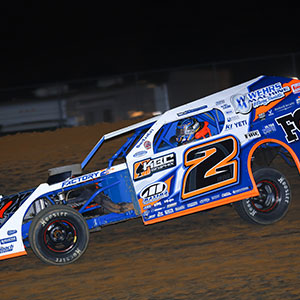 Circle Track
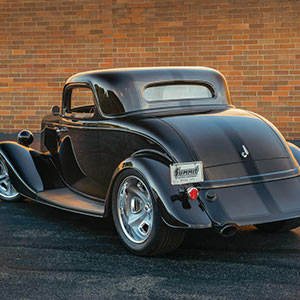 Street Rod
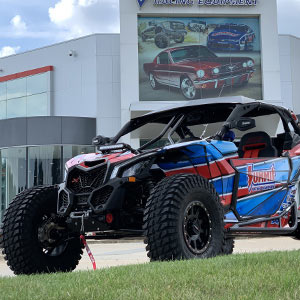 Powersports
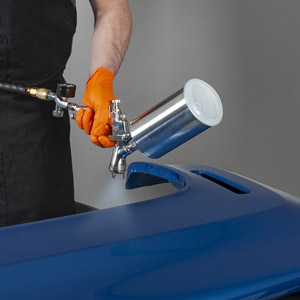 Paint & Body
 Marine
 Jr Dragster