 Truck / SUV
 Jeep®
Jeep®
 Restoration
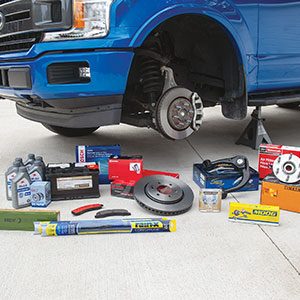 Stock Replacement
 Late Model Muscle
 Tools
Tools
 Gifts, Clothing, & More
 Circle Track
 Street Rod
 Powersports
 Paint & Body
 Marine
 Jr Dragster
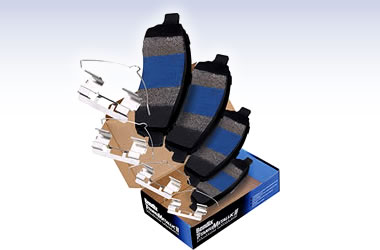
Who better to get the skinny on brakes from than your pals at Summit Racing and the experts at Bendix? Bendix has been in the OEM and aftermarket brake business almost as long as there have been cars to slow down. They’ve put together this handy FAQ and troubleshooting tips list to address the most common questions about braking systems.
Summit Racing carries a large selection of Bendix brake pads, rotors, drums, and other brake system parts for domestic and import vehicles from the ‘30s through today.
LINK TO ALL BENDIX BRAKE PARTS
FAQs: Brake Pads
Q: Should you install the same type of pads that were on the vehicle when it was new?
A: Aftermarket replacement pads should be the same composition as the originals. For example, if the vehicle’s original brake pads were semi-metallic, the replacement pads should also be semi-metallic.
Q: I'm getting premature front pad wear. What causes this and what can I do about it?
A: Many SUVs, minivans, and even some cars use a load sensing proportioning valve, located near the rear axle. The valve senses if ride height is lower than normal due to increased weight. If so, the valve directs more hydraulic pressure to the rear wheels to equalize braking forces. If the valve is out of adjustment or defective, the front brakes will perform too much of the braking and wear out prematurely. Check the service manual for your vehicle to find the correct valve adjustment procedure.
FAQs: Calipers
Q: A few months ago I installed a loaded caliper on the left side of a vehicle only (the right caliper was okay). I also installed new pads on both sides. We just did an inspection and the right caliper checks out fine but the pads on that side are a bit more worn than the ones in new caliper. Why?
A: It’s happening because you installed a remanufactured caliper with a new piston, square-cut O-ring, dust seal, and slide mechanisms. That brought the brakes at that wheel up to OEM specs. But the square-cut O-ring, dust seal, and slides on the other side are old, so that caliper doesn’t release as quickly. However, over time that extra pad/rotor contact can result in faster wear of the pads in the old caliper. We recommend replacing or rebuilding the right-side caliper as soon as practicable.
FAQs: Rotors
Q: Do rotors need to be turned on every brake job?
A: The odds of finding a rotor that can be reused without machining is next to impossible. Surface smoothness, lateral run-out, minimum thickness, machine-to, and maximum thickness measurements must meet manufacturer’s specifications. The best way to achieve proper burnishing, the least amount of noise and dust, longest life, and best performance is to restore the rotor surface to like-new condition when installing new pads.
FAQs: Brake Pedal
Q: How do I determine if a brake pedal problem is front, rear, or side-to-side related?
A: The best method is to isolate the brake system circuits and components by installing temporary brake system block-off plugs. Remove the plugs one at a time and from side to side to determine which component is at fault. Never clamp off a flexible brake hose—that can permanently damage the hose.
Q: How do I determine if a hard brake pedal is power booster-related or a brake problem?
A: The easiest way is to deplete air from the vacuum booster by pumping the pedal until it’s hard (with the engine off). Next, hold your foot firmly on the brake pedal and start the engine. If the power booster is operating correctly, the pedal should drop slightly with engine vacuum and become firm. If the hard pedal condition still exists, check for binding linkage or over adjusted drum/shoe assemblies. Check the vacuum check valve at the inlet of the booster. It should allow the engine to draw a vacuum on the booster, but not let the air flow in the opposite direction.
FAQs: Parking Brake
Q: What is the correct parking brake adjustment?
A: Some manufacturers recommend tightening the parking brake cable to ensure full engagement after just three clicks, while others require a full pedal pump. Consult the service manual for your vehicle to find the exact procedure. After adjusting to the manufacturer’s specifications apply and release the parking brake several times to ensure correct operation.
FAQs: Brake Fluid
Q: How do you choose the right brake fluid?
A: DOT 3 and DOT 4 are both glycol-based and hygroscopic. DOT 4 fluid has higher wet and dry boiling points. It’s easy to tell which type of brake fluid a vehicle maker specifies because it’s listed right on the master cylinder reservoir cap. To avoid any potential issues, we recommend that you always use the factory recommended fluid type for your vehicle.
Q: Are DOT 3 and DOT 4 brake fluid interchangeable?
A: Although DOT 4 fluid can be used in place of DOT 3, DOT 4 has a higher boiling point so it absorbs moisture faster. Changing to a fluid that is a better “sponge” means the fluid change intervals are shorter for DOT 4 than for DOT 3. NEVER use DOT 3 fluid when DOT 4 is recommended because its boiling point protection won’t meet vehicle manufacturer specs.
Q: Can you use DOT 5 brake fluid with ABS brake systems?
A: DOT 5 fluid is silicone-based and non-hygroscopic and is not recommended for use with ABS/traction control systems because it may aerate during system operation. Since silicone-based fluids have different lubricating characteristics than glycol-based fluids, DOT 5 is not interchangeable with DOT 3 or DOT 4 fluid. It’s always best to stay with the fluid type recommended by the vehicle’s manufacturer.
TROUBLESHOOTING TIPS
Q: How do I properly diagnose brake noises?
A: Brake noise generally falls into three categories: squeaks, squeals, and grinds/growls. A high-pitched squeal that starts wgeb you first apply the brakes but goes away as you apply more pressure can be caused by a wear indicator. If the high pitched squeal doesn’t go away with increased braking effort, or the noise sounds more like a squeak, check for a missing or rusted-out shim(s), a stuck caliper, or worn friction material (rivets rubbing against the brake drum).
Grinds and growls can be caused by stuck calipers or metal-to-metal contact between the friction material backing plates/shoes and the rotor/drum. Make sure there’s smooth caliper movement on the slide pins (floating calipers only), even pad wear, and no deep grooves on the rotor face. Keep in mind that rapid clicking noises, motor/pump humming, cycling, or pulsing with ABS braking systems are normal during ABS operation.
Q: What are potential causes of brake pull?
A: Anyone who works on brakes is sure to run across “brake pull” complaints sooner or later. Here are the most common causes:
• Restricted pistons or delayed piston retraction is fairly common on higher mileage vehicles and those with brakes that have severely overheated. The square-cut piston seal rolls slightly forward during brake application, then back when released. If the piston seals are old and hardened, they may delay caliper release or not release at all. So the caliper clamping force keeps the pads in contact with the rotor, causing a pull. Rebuild the calipers with new seals to fix the problem.
• Friction material contamination: brake fluid, engine coolant, grease, and engine oil can contaminate the pads on one side of the vehicle, making them grip either more or less than the opposite side. Most often the contamination is permanent and replacing the pads is the only real fix. When you replace the pads, be sure to eliminate the source of the leak and clean off all the contaminants. Also, be sure to use the same type of pads on both sides of the vehicle. Differences in friction materials can create pull issues.
• Unequal side-to-side brake fluid pressure: line blockage, hose damage, master cylinder wear, a malfunctioning proportioning/combination valve, and stuck ABS valves can cause these kinds of unequal pressure problems. The easiest way to find and isolate the problem is to measure rotor/hub temperatures with a non-contact infrared thermometer. The problem wheel will be much hotter than its axle companion. The thermometer will also show the brake that’s not functioning.
• Tire-related and suspension issues are less common causes of brake pull, but don’t discount them. If you’ve already checked the most likely causes of brake pull noted above, swap the two front tires. If the vehicle pulls in the opposite direction, that’s a sign of a tire-related issue. Check for uneven tire pressure, misalignment, worn suspension parts, uneven tread wear (caused by out-of-spec camber), tire-size mismatches or belt separations.
Q: I have a diesel-powered pickup with “grabby brakes” and hard power steering. The brakes all look normal at the wheels. Are these two issues related?
A: Probably. Diesels don’t produce manifold vacuum, so they use hydraulic brake boosters. Hydraulic boosters are usually pressurized by fluid from the power steering pump, so the hard steering and erratic braking may be related. If both steering and braking are affected and the vehicle uses one pump, there is a good possibility the power steering pump is low on output. If the pump is showing signs of wear, these symptoms can usually be felt when the brakes and steering are used at the same time. A power steering pressure check will show if the pressure release and maximum pump output are functioning properly.