 Truck / SUV
 Jeep®
Jeep®
 Restoration
 Stock Replacement
 Late Model Muscle
 Tools
Tools
 Gifts, Clothing, & More
 Circle Track
 Street Rod
 Powersports
 Paint & Body
 Marine
 Jr Dragster
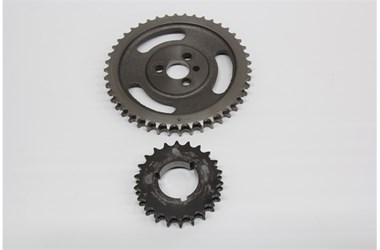
It's a new year, and Jeff Smith is ready to answer more of your burning tech questions. He finished 2016 with advice on cam and ignition timing and air compressor efficiency.
Cam Timing Issues
Todd B. has a 1967 Camaro with a 327 small block under the hood. The engine has 'double hump' cast iron cylinder heads, a 252 degree duration/.521 inch lift Crane flat tappet cam, a Holley 750 double pumper on a dual plane intake, and an MSD distributor and 7A ignition. He advanced the cam two teeth on the cam gear 25 years ago when he built the engine, and now wonders why the 327 is so hard to start.
Two things got Jeff's attention immediately--a camshaft that is too big for the engine and way, way overadvanced. Moving the cam timing by two gear teeth, he effectively moved the cam by 33 degrees-a huge change. By comparison, the better aftermarket timing sets allow you to move the cam usually no more than 8 degrees.
There is a lot more to this cam timing thing, which Jeff explains much better in the article.
Increasing Air Compressor Capacity
K.S. has a 150 psi air compressor with a 25 gallon tank that can't quite keep up with some of his hungrier air tools. He wants to increase the compressor's capacity by moving the compressor outside the garage and running 30 feet of 1.5 inch diameter pipe from it to the garage, figuring the pipe will add more air volume.
But how does one calculate how much extra capacity the pipe will add? Jeff Smith knows, and while it involves some math, it's not hard to figure out. For K.S., that 30 feet of pipe will add about 14% additional air volume.
Jeff also offers advice on the type of pipe to use to plumb such a setup--it's actually critical to your safety, so pay attention.