 Truck / SUV
 Jeep®
 Restoration
 Stock Replacement
 Late Model Muscle
 Tools
 Gifts, Clothing, & More
 Circle Track
 Street Rod
 Powersports
 Paint & Body
 Marine
 Jr Dragster
News & Events
-
Slide 1
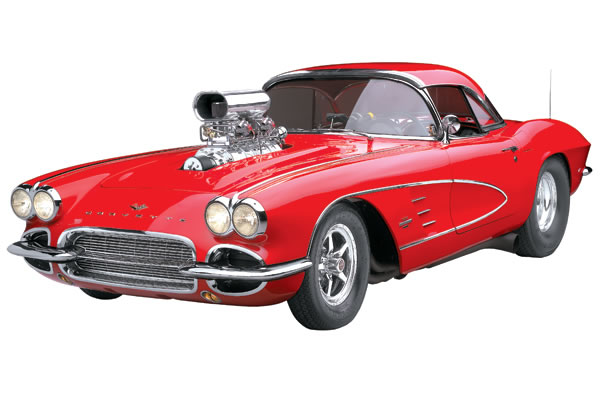
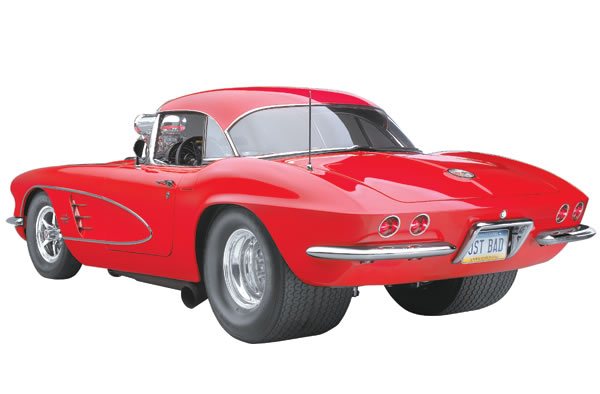
If you need a lesson in the craft of doing things your own self, talk to Art Krepps of Beaver, Pennsylvania. He'll be glad to tell you what it takes to build a car like his 1961 Corvette: the long winter nights, the new addition on the garage, the hours of planning, doing, and redoing until things were exactly how he wanted them. With help from his sons Jason and Josh, Art fabbed the frame, built the supercharged L88 big block, sprayed the paint, and rehabbed the interior. "Doing the work myself was the most rewarding part of the project," Art said. "I put a lot of hard work into making [the car] just the way I wanted it." Observe and learn well, grasshopper.
-
Slide 2
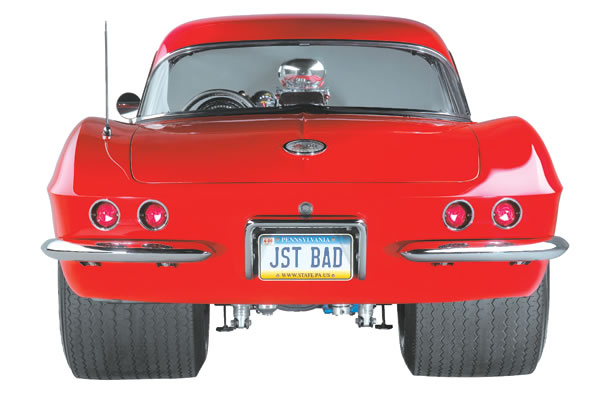
Chevrolet didn't fit 33 inch rollers under Corvettes in 1961--nor any other year, for that matter. Art backhalfed the stock frame with 2 x 3 inch box tubing and built aluminum tubs to accomodate the big Mickey Thompson Sportsman tires. A narrowed Ford 9 inch rear axle is suspended by a set of Chassis Engineering ladder bars with Aldan coil-overs and a Competition Engineering diagonal link. Art trashed the 1950 Chevy truck front suspension, replacing it with Fat Man Fabrications tubular A-arms, Heidt's 2 inch drop spindles, and a power rack and pinion steering setup. There are the requisite four-wheel disc brakes (Wilwoods up front, GM 11 inchers out back), Art-fabbed body and radiator mounts, and a custom driveshaft.
-
Slide 3
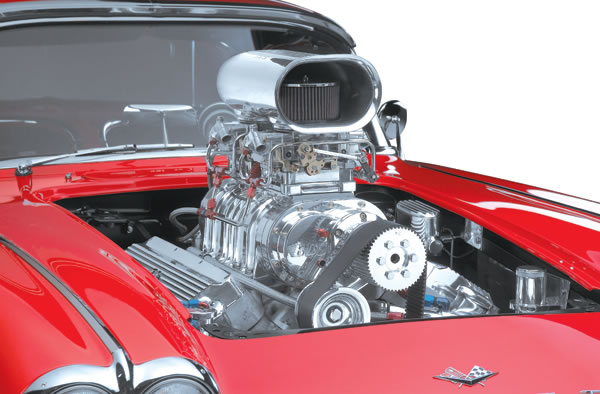
Having a 427 cubic inch L88 motor under the hood would be quite sufficient for most Corvette fans. Not Art. He wanted something with presence...and nothing says presence like a polished 8-71 supercharger. Art rebuilt the 427 with 8:1 forged pistons, a .600 inch lift GM solid camshaft, and aluminum L88 heads. The blower is a BDS Stage II Air-Loc sitting atop an Edelbrock intake and two 750 cfm Holley double pumper carburetors. At 14 pounds of boost, the engine makes around 850 horsepower. And those big honkin' valve covers? They're two-piece Larsons, one of only two sets Art has ever seen. "People think they're the cylinder heads because they're so big!" he told us.
-
Slide 4
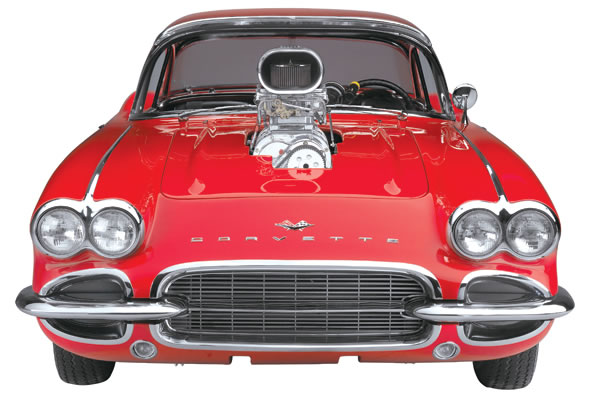
Art kept the body modfications to a minimum. With a car with lines like a '61 Vette, we heartily agree with his decision. The biggest changes were made to the hood; Art cut it for blower clearance, and molded it so the opening followed the contours of the supercharger perfectly. He also made new hinges so the hood comes further up and forward than it did in the factory configuration. Once the fiberglass was up to snuff, Art sprayed the car in PPG Bright and Bold Cherry Red and installed the original chrome and stainless trim.
-
Slide 5
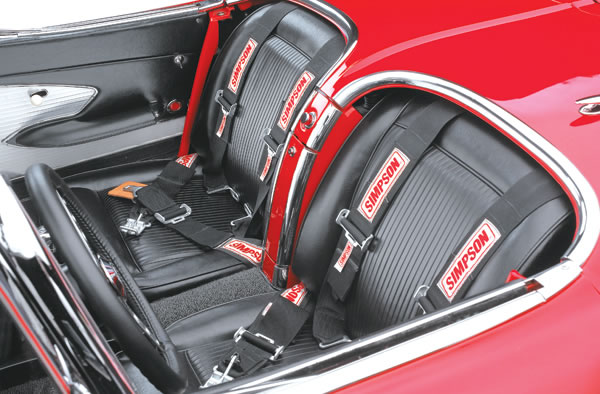
Art's passion for keeping the Corvette as stock-appearing as possible extended to the interior as well. "I didn't want to cut up the dash because I was trying to keep the car as original as possible," he explained. "I made a gauge panel that covers the center panel where the radio was originally." The panel houses Auto Meter Pro-Comp gauges; an 5 inch Auto Meter Monster tach sits on the dash next to the rearview mirror. As for the missing radio, Art says he doesn't mind not having it "We'd never be able to hear it anyway--the rumble is our radio!"
-
Slide 6
Check out the sewer pipes peeking out just in front of the rear tires. Those 5 inch diameter outlets are connected to an Art-fabbed exhaust system that consists of Hedman fenderwell headers, Car Chemistry three-disc inserts, and four inch diesel truck mufflers. The flat black finish helps the system blend into the chassis.